
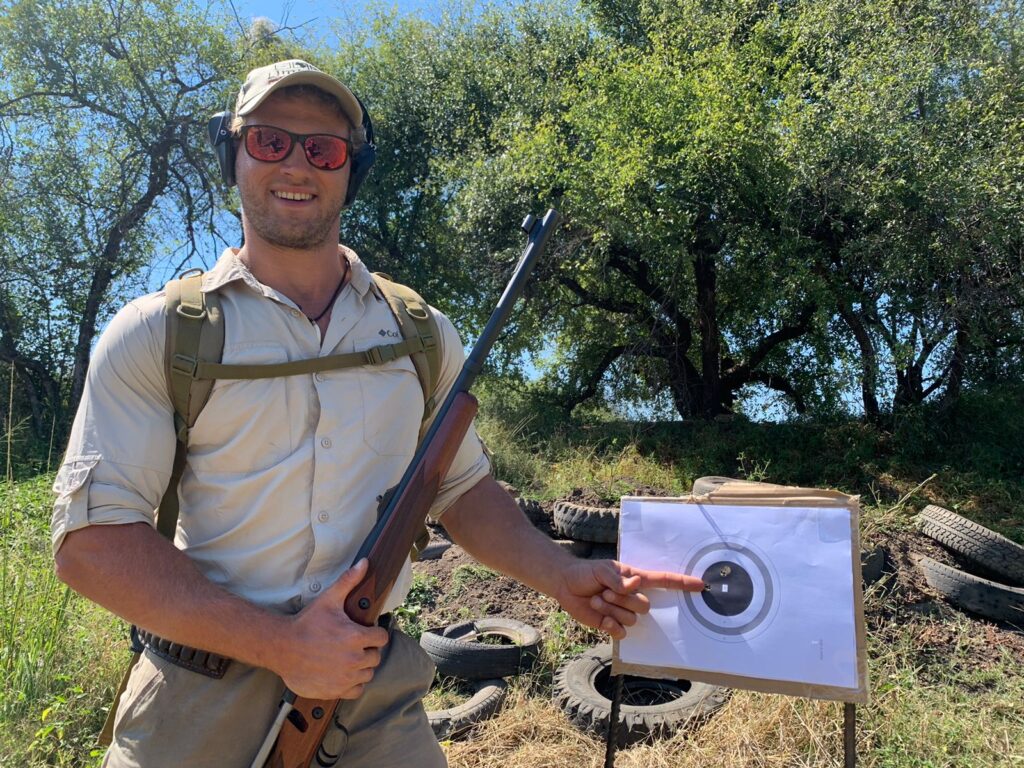
The Trails Guide month course has come to an end, and what a month it was!
These last 2 weeks were more practical-focused compared to the first two, since we all made it through the FGASA Trails Guide theory test, and were put onto the Advanced Rifle Handling training.
By the name itself – Advanced Rifle Handling – it is understandable that is not something that comes easily, even if a person has been dealing with weapons for quite a long time. It must be added that, prior to being allowed onto the ARH course, we were all put through the basic weapon handling course known as “PFTC” in South Africa, which teaches you the basics and addresses the legalities around the use of firearms.
ARH is in fact, an advanced handling course concerning large calibre bolt-action rifles, which gives you all the tools and skills needed for its unique task: preparing you to stop a potential animal charge during a guided walking experience with guests.
It may sound crude put just like that, in fact this whole matter deserves to be put into context with a proper explanation.
According to the FGASA protocols, in order to be able to lead guests on a walk in a dangerous game environment, you need to be trained and prepared in case you find yourself in a situation in which a dangerous game species attacks you and your group.
The first thing you learn as a Trails Guide though, is how to avoid potentially dangerous scenarios concerning animals, but it is not always easy to predict nature, and while we all want, as guides and nature enthusiasts, to enjoy the viewing of wildlife from a safe and ethical perspective, we should also be prepared in case something goes wrong and for the unexpected.
After all, it’s done in order to avoid a confrontation with an animal in first place, or to head off a charge, but there still is a possibility that an animal could actually follow through with an attack on the walking group. The reasons can be different, and way too many to list here. It is not even easy to discern between a real charge and a warning charge, even though you have some clues depending on the animal species itself, but that is where the theory gives way to real life scenarios.
The bottom line is, even the most experienced walking guide might find themselves in a dangerous situation, and must be prepared, acting and reacting according to certain procedures on which they has been trained.
That is what ARH is all about: preparation for the worst possible scenario.
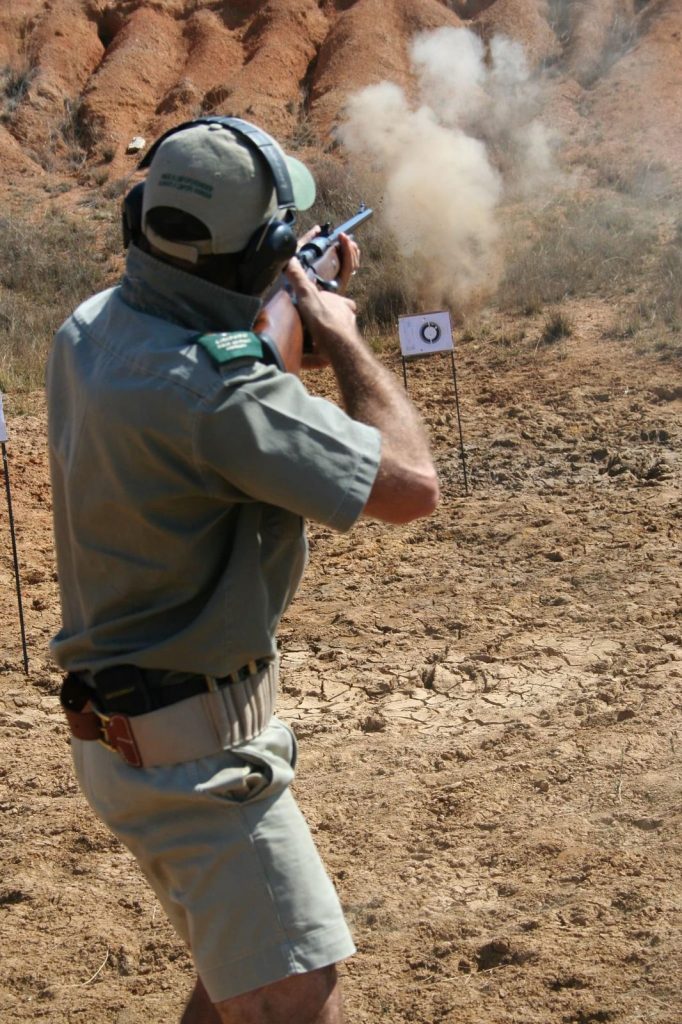
But it is also more than that, it is actually a great and fulfilling experience!
Once you are declared competent when it comes to safety and procedures concerning rifles, you are then allowed onto the shooting range, where the actual live-round shooting takes place.
There you are shown a series of exercises or “drills” (6 in total), which you are then required to perform, some of them first with dummy rounds, then with live rounds.
The exercises cover a wide variety of skills, from being able to properly load, unload and chamber rounds without looking (blindfold exercise) to placing 3 shots on the target during a simulated rifle failure (immediate action exercise).
All these skills must be possessed by you as a Trails Guide, and they basically reproduce what could happen in the field, where you won’t be able to think and must act quickly, clearly and without hesitation, relying only on muscle memory and previous experience gained during training.
Your competency regarding the first 5 exercises is tested on a single day after you’ve been through the preparation period, and you are evaluated on each drill depending on your results on the targets, and when it applies, on time. In fact, some exercises have a time limit of several seconds in which you have to successfully complete the drill.
If you make it through the first 5 exercises, then the last part of ARH is dedicated to the preparation and evaluation regarding the reaction to a simulated animal charge, where you need to be able to hit a brain shot on a moving animal target coming towards you, at the same time giving guests instructions, trying to head off the charge in the first place and successfully follow a certain procedure once the animal is down, involving insurance shots, guest checking and weapon reloading, all while maintaining constant all-round awareness.
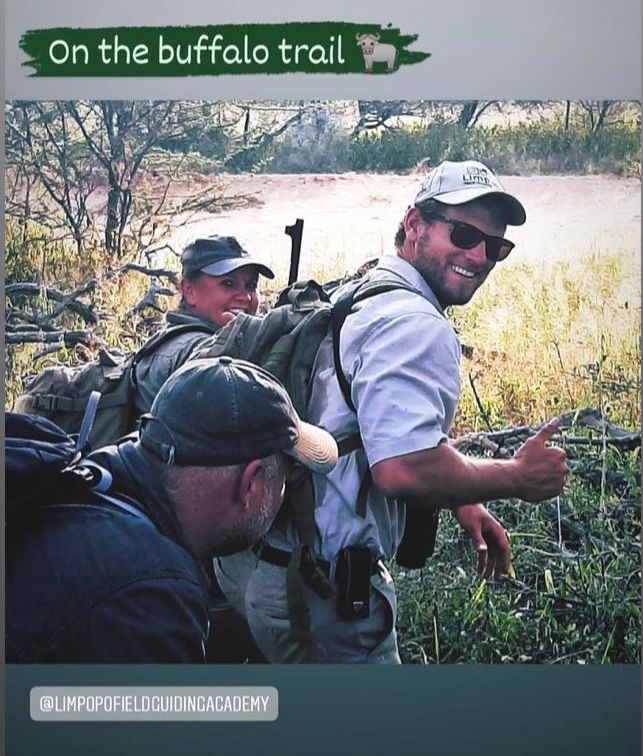
Certainly not an easy task, considering that everything happens in a matter of seconds!
But again, if you want to be a Trails Guide, you’ve got to learn how to deal with these scenarios.
If you pass all the tests and drills, you then become eligible for the practical evaluation that will, if successfully completed, put you forth on the next leg of the Apprentice Trails Guide journey.
In the 4th and final week of the Apprentice Trails Guide course, we had the chance to carry the rifle in the bush for the first time during the 10 hours of mentorship and practical assessment, and again it has been an exciting experience from every perspective. That feeling of guiding a group of people through the wild savannah with a rifle in your hands is something that cannot be described….it is the epitome of a thrilling adventure, and undoubtedly, the quintessential safari experience.
Looking back, it is certainly one of the greatest things I’ve ever done in my life; it gave me a lot of knowledge, a lot of skills and a lot of time spent outdoors – a real, true embracing of the African wilds!
In the next blog, I will describe more about the final week of walking mentorship, which includes preparation and planning for a guest walk in dangerous game areas, taking the trail, following and locating Big 5 species on foot.
Stay tuned for more thrilling adventures from the African bush!
Limpopo Field Guiding Academy